
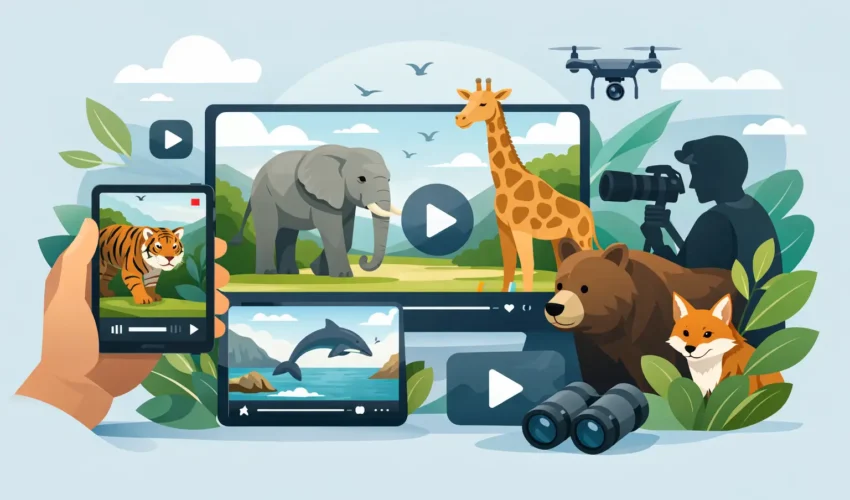

A grizzly rising from tall grass. A moose stopping traffic with one slow turn of its head. A hawk dropping from the sky with unreal precision. The best wildlife animal encounter videos do not need a scripted setup or flashy effects. The animal is the spectacle, and the moment feels bigger because nobody can fully control it.
That raw unpredictability is why wildlife clips belong beside the fastest cars, hardest lifts, biggest storms, and most extreme sports footage. Nature has its own power rankings. A close look at a whale breach, a wolf pack on the move, or a big cat stalking through brush can stop a scroll faster than almost anything else.
Why Wildlife Animal Encounter Videos Hit So Hard
Wildlife footage creates instant tension because the viewer understands the stakes. A wild animal is not performing on cue. It can disappear, charge, hunt, defend its young, or simply ignore the camera. Even a quiet encounter carries a question: what happens next?
The strongest clips also show scale. A bison can make a full-size SUV look small. An alligator sliding into black water changes the mood of an entire scene in seconds. An eagle lifting off with its wings fully spread makes it clear why birds of prey have fascinated people for centuries.
There is also a difference between watching wildlife and watching animals in a controlled setting. A zoo clip may be interesting, but a truly wild encounter has terrain, weather, distance, sound, and uncertainty working together. Snow blowing across a herd of elk or surf exploding around sea lions adds to the action without needing a narrator to explain why the footage matters.
For viewers, these videos offer a rare kind of access. Most people will never stand near a wild polar bear, see a mountain lion cross a trail, or watch a pod of orcas work the shoreline. Good footage brings those moments close while keeping the audience safely on the other side of the screen.
The Encounters That Keep Viewers Watching
Not every wildlife clip needs a chase or a near miss. The best category has range. Big action gets attention, but unusual behavior is often what earns the replay.
Predator footage is an obvious draw. Lions, wolves, bears, crocodiles, sharks, and raptors command attention because their movement looks purposeful. A stalking sequence can be more gripping than an actual chase, especially when the camera catches the animal reading the terrain, listening, and waiting.
Massive herbivores deliver a different kind of impact. Moose, bison, elephants, hippos, and bull elk show how dangerous “peaceful” animals can be when people get too close. These clips work because they correct a common mistake: size, speed, and attitude do not always match an animal’s calm appearance.
Then there are the surprise encounters. A curious fox walking up to a trail camera, a deer appearing beside a mountain biker, or a seal hitching a ride near a kayak can turn an ordinary outing into a memorable video. The animal does not have to be aggressive for the moment to feel electric.
Seasonal footage adds another layer. Rutting elk, bear activity before winter, sea turtle hatchlings, bird migrations, and animals navigating deep snow give viewers a reason to return. Wildlife is never static, and the time of year can completely change what is possible to capture.
Close Is Not Always Better
The most intense-looking videos are not necessarily the ones filmed from the shortest distance. A long-lens shot of a bear fishing across a river can be far more impressive than shaky phone footage taken from a few unsafe feet away.
Distance also reveals natural behavior. Animals that do not feel trapped, cornered, fed, or chased are more likely to act normally. That means better footage, fewer risky situations, and less pressure on the animal.
A creator who backs away from an agitated animal may lose one dramatic shot, but they gain credibility. Viewers can tell when someone is forcing an encounter. The video might get attention, but it carries a different feeling when the animal is clearly stressed.
What Makes a Wildlife Clip Credible
Wildlife video moves fast, and context matters. A dramatic title can make a clip more clickable, but viewers deserve enough information to understand what they are seeing. Was the animal in a protected area? Was the footage recorded from a vehicle, a trail, a boat, or a legal viewing distance? Is the behavior normal, defensive, or unusually aggressive?
Clear context helps separate a legitimate encounter from content designed to provoke animals. Feeding wildlife for a reaction, blocking an animal’s path, crowding it for a selfie, or treating a young animal as harmless can create dangerous outcomes. It can also train animals to approach people, which is bad for both sides.
The most watchable wildlife animal encounter videos usually get the basics right: stable framing, useful location or species details, an honest description, and no obvious interference. They can still be wild, loud, and full of adrenaline. Respect does not make the footage boring. It makes the moment real.
Creators should also be careful with misleading edits. A hard cut can make separate events look like one confrontation. Old footage can be passed off as recent. Audio can be added to exaggerate a reaction. None of that means edited wildlife content has no value, but a label or straightforward description goes a long way.
Watch the Animal, Not Just the Headline
A great wildlife clip rewards viewers who look beyond the obvious. Watch body language. A raised tail, pinned ears, lowered head, sudden stillness, or repeated glances toward an exit route can reveal far more than a sensational caption.
This is especially true with animals people underestimate. Deer can kick. Elk can charge. Bison can move much faster than they look. Sea lions have teeth, and many marine animals become defensive around pups or food. The clip may be entertaining, but it can also show why respectful distance is the smart move.
For outdoor viewers, that knowledge carries over into real life. A video of a bear bluff charge may show how quickly a situation changes when someone gets between a mother and cubs. A clip of a bull moose on a trail may make the case for giving an animal room instead of trying to squeeze past for a better photo.
Better Footage Starts With Better Choices
If you film wildlife, your first job is not getting the shot. It is avoiding a situation that changes the animal’s behavior or puts people at risk. Let the animal decide the distance. Use zoom, stay quiet, avoid sudden movement, and leave when its body language says it is uncomfortable.
Do not bait, feed, touch, corner, or pursue wildlife for content. Those choices can turn a remarkable encounter into a bad story fast. They can also lead to fines, injuries, property damage, or an animal being removed after it becomes too used to people.
Patience is the real advantage. Many of the strongest clips happen when a creator waits without interfering. The light improves. The animal settles. A group moves into frame. What looked like an empty stretch of forest becomes a once-in-a-season moment.
For viewers looking for the next unforgettable clip, VIDS24 is built for that fast, category-driven hunt: the sudden charge, the impossible leap, the rare species, and the calm-before-the-action scene that makes the replay worth it.
The best wildlife videos leave you impressed by the animal, not by how close the person behind the camera got. Keep that standard in mind, and every encounter becomes more thrilling for the right reason.