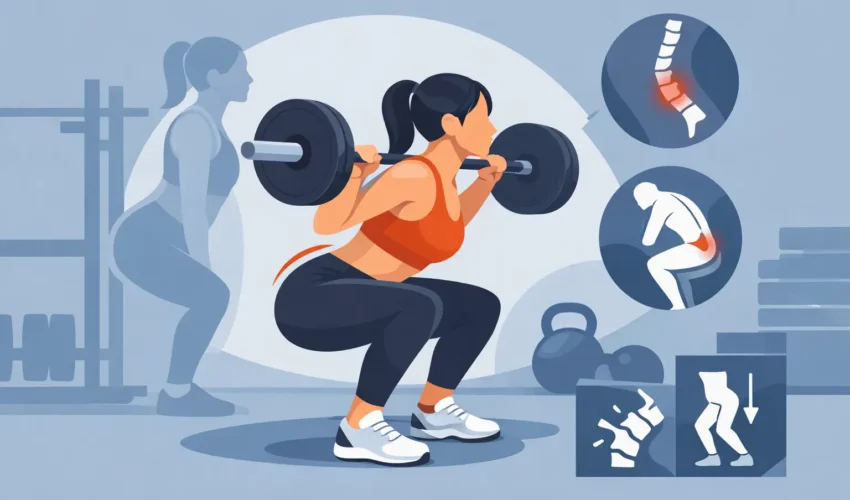

That big arch might look powerful in a heavy squat clip, but squat back arch pain is not a badge of commitment. A solid squat needs spinal control, not an exaggerated lower-back bend that steals tension from your legs and turns every rep into a gamble.
A small natural curve in the low back is normal. Pain, pinching, or a sharp catch as you descend or drive out of the hole is different. The goal is not to force your back flat. It is to keep your torso braced and your spine stable while your hips, knees, and ankles do the work.
Why squat back arch pain shows up
The most common culprit is overextension. Lifters hear “chest up” and “arch hard,” then crank their ribs high, tip the pelvis forward, and create a dramatic low-back curve before the bar even moves. Under a loaded barbell, that position can compress the joints and soft tissues in the lumbar spine.
This often happens when the brace is missing. Instead of expanding the abdomen and sides of the torso with a deep breath, the lifter tries to create tightness by squeezing the low back. It can feel locked in for a second, but it is not the same as a 360-degree brace. When the descent gets challenging, the ribs flare farther and the back takes the load.
Mobility can be part of the story, but it is not always the villain. Limited ankle range may force your torso to lean forward or your heels to rise. Tight hips can make it harder to reach depth without losing pelvic control. On the other hand, plenty of lifters with average mobility get painful arches because they are chasing an aggressive cue or loading the bar beyond what their current technique can support.
Fatigue matters too. Your first three reps may look sharp, then rep six becomes a different lift. If your low back arches harder as the set continues, the weight, rep target, or rest period may be outpacing your ability to stay organized. That is a programming issue as much as a form issue.
First, identify where the pain lives
A dull muscle ache on both sides of the low back after an unfamiliar training session is not the same as a sharp, one-sided pain during the lift. Neither should be ignored, but they call for different levels of caution.
Pain directly under the bar at the upper back can come from bar placement, a bony bar path, or upper-back tension that is too loose. Pain near the belt line, especially when you lean back at lockout, points more often toward lumbar overextension. Pain that shoots into a glute or leg, causes numbness or tingling, or comes with weakness is a clear reason to stop loading and get evaluated by a qualified medical professional.
Also pay attention to timing. Pain only at the bottom can suggest that you are running out of control or range at depth. Pain on the way up may show that you lose your brace when the effort spikes. Pain after training that gets worse day after day deserves more respect than ordinary soreness.
Fix the position before adding plates
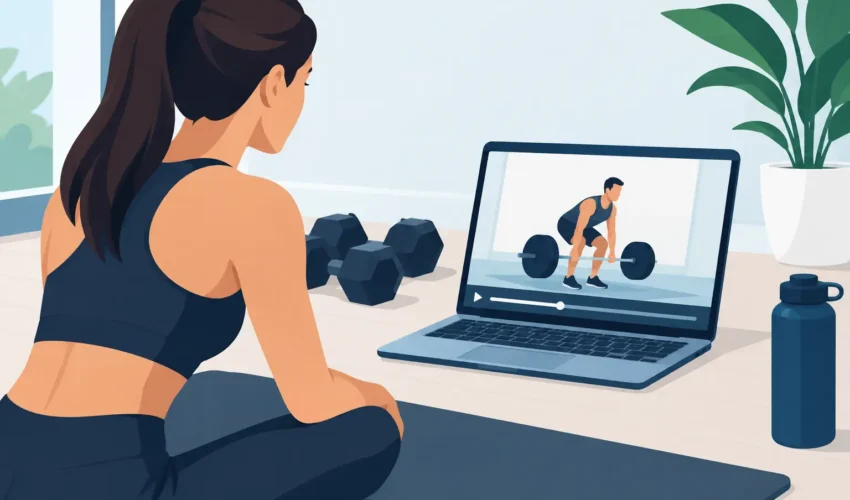
Start with an unloaded squat or a light goblet squat. Film from the side if possible. You are looking for a rib cage stacked over a pelvis, not ribs thrusting forward and a lower back cranked into a deep arch.
Take a breath into your belly, sides, and lower back. Then tighten your midsection as if you are about to absorb a body shot. Keep that pressure while you descend. You do not need to make your torso rigid like concrete, but you should not see your ribs pop up as you stand.
Use a few simple cues: “ribs down,” “brace around the whole trunk,” and “stand tall, don’t lean back.” The last one matters at lockout. Many lifters finish a hard rep by throwing their hips forward and leaning their torso backward. Finish by squeezing the glutes and bringing your body back to stacked, not by jamming the low back into extension.
Your stance and bar position can also change the pressure. A high-bar squat generally asks for a more upright torso, while a low-bar squat usually involves more forward lean and stronger hip involvement. Neither is automatically safer. The better choice is the one you can brace, control, and repeat without pain. If a narrow stance forces your pelvis into a bad position at depth, try a slightly wider stance with toes turned out modestly. Make small changes, then test them with light weight.
Build the strength that keeps the arch honest
Technique is the first move, but strength gives technique staying power. If your low back takes over every squat, your trunk and hips may not be sharing the job well enough.
Paused goblet squats are a strong reset. Hold a light dumbbell or kettlebell at the chest, descend under control, pause for two seconds, and keep the ribs stacked. The front-loaded position gives you immediate feedback: if you overarch, the weight tends to pull you out of control.
Front squats can serve a similar purpose for lifters who tolerate them well. They demand upper-back position and a disciplined brace, often with less temptation to turn the lockout into a backbend. Tempo back squats are another useful tool. A three-second descent exposes the exact point where you lose position.
Outside the rack, train your trunk to resist motion. Dead bugs, side planks, loaded carries, and Pallof presses are not flashy, but they teach the torso to hold its shape while the limbs move. Pair that with glute work such as split squats, hip thrusts, or controlled Romanian deadlifts. The point is not to isolate every muscle. It is to create a body that can keep the bar path and spinal position under pressure.
Do not turn every accessory day into a punishment circuit. Two or three focused movements after your main work are enough for most lifters. Progress them gradually and keep the quality high.
Know when to reduce the load or stop
If you can squat pain-free at 135 pounds but pain appears at 225, that is useful information. Reduce the load, keep the cleaner movement pattern, and build back up over multiple sessions. A temporary regression is smarter than forcing a personal record and losing training time.
Skip heavy squats for the day if pain is sharp, escalating, or changes how you move. Do not try to “warm through” nerve symptoms, radiating pain, numbness, tingling, unexplained weakness, or bowel or bladder changes. Seek urgent medical care for serious symptoms, and consult a licensed clinician or sports physical therapist for pain that persists, returns often, or follows a specific injury event.
A belt can help some experienced lifters create more abdominal pressure, but it is not a cure for squat back arch pain. If you use one, brace into it all the way around. Do not use it as permission to overextend or load a pattern you cannot control beltless.
The best squat footage shows power without panic: a stable torso, a controlled descent, and a hard drive upward with no dramatic backbend at the finish. Clean up the brace, earn the load, and let the legs deliver the show.