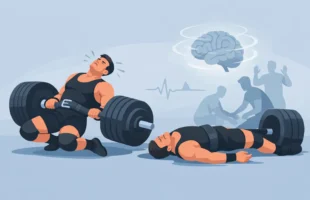
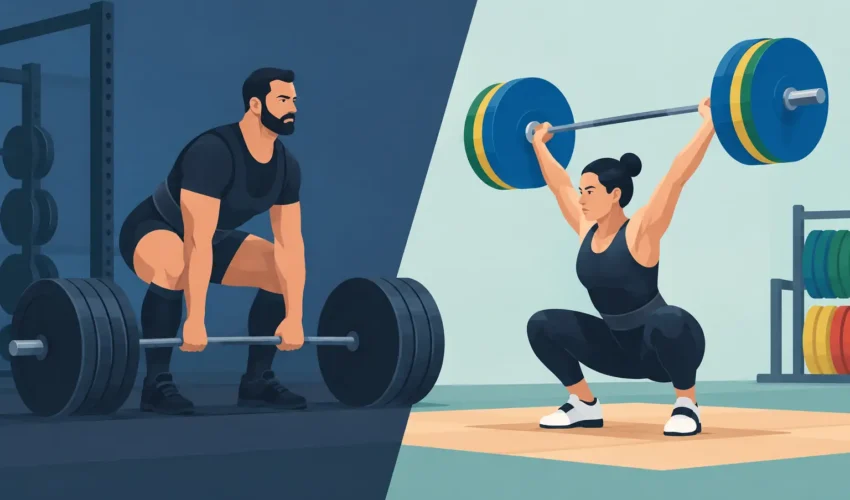

A loaded bar bends, the crowd gets quiet, and one clean rep can make a whole gym stop training to watch. That is where the powerlifting vs olympic lifting debate gets interesting. Both sports produce serious strength, brutal focus, and highlight-reel lifts, but they ask your body to solve very different problems.
Powerlifting is about moving the most weight through three controlled lifts. Olympic lifting, more accurately called Olympic weightlifting, is about launching a barbell from the floor to overhead with speed, timing, and precision. One rewards raw force and grinding determination. The other rewards explosive athleticism under a clock that lasts barely a second.
Powerlifting vs Olympic Lifting: The Main Difference
Powerlifting competition centers on the squat, bench press, and deadlift. Each lifter gets three attempts at each movement, and their best successful lift in every category creates their total. The mission is simple: lift as much as possible while meeting strict standards for depth, pauses, lockouts, and control.
Olympic lifting has only two competition movements: the snatch and the clean and jerk. In the snatch, the bar travels from the floor to locked arms overhead in one continuous movement. In the clean and jerk, the athlete first catches the bar on the shoulders, then drives it overhead. It looks fast because it is fast. A big lift can be won or lost by a tiny shift in balance, a slow pull from the floor, or an unstable receiving position.
The difference is not that powerlifters are strong and Olympic lifters are athletic. Elite athletes in both sports are remarkably strong, mobile, and disciplined. The real difference is how that strength shows up. Powerlifting lets an athlete create and maintain tension through a slower, more deliberate effort. Olympic lifting demands force production at high speed, then the ability to get under a moving barbell in a stable position.
The Lifts: Heavy Grinds vs Explosive Precision
The powerlifting squat, bench, and deadlift are easier to recognize because they are common gym staples. That does not make them easy. A competition squat requires depth and control under a bar that may weigh more than a refrigerator. A bench press needs a tight setup, consistent bar path, and patience at the chest. The deadlift is pure theater: a bar on the floor, a locked-out finish, and nowhere to hide.
Olympic lifts are less forgiving. The snatch combines a powerful pull, a rapid turnover, an overhead squat, and a rock-solid catch. The clean and jerk has more moving parts and typically allows heavier weight, but it still requires technical discipline from floor to finish.
That is why a powerlifter can be incredibly strong yet struggle to snatch efficiently on day one. Likewise, a skilled Olympic lifter may have a huge clean and jerk but need time to build the bench press setup and deadlift-specific strength needed for powerlifting. Strength transfers, but sport skill matters.
Which Sport Builds More Strength?
If your definition of strength is the ability to squat, bench, and deadlift the biggest possible numbers, powerlifting wins by design. Training is highly specific. Athletes spend years improving bracing, positioning, leverage, and confidence under maximal loads. Accessories such as rows, presses, lunges, hamstring work, and triceps training support the three competition lifts.
If your definition includes power, coordination, speed, and the ability to move a loaded barbell overhead, Olympic lifting has the edge. It develops explosive extension through the hips, knees, and ankles, then demands control in deep squat and overhead positions. The training can carry over well to sports that involve jumping, sprinting, tackling, or rapid changes of direction.
But neither sport owns all-purpose fitness. Olympic lifting does not automatically build elite endurance, and powerlifting does not automatically create quickness. Your outcome depends on programming, recovery, coaching quality, and whether you train the physical qualities your life or sport actually needs.
Technique, Mobility, and the Learning Curve
Powerlifting has a lower entry barrier. Most beginners can learn safe versions of the squat, bench press, and deadlift quickly with a qualified coach or clear instruction. Getting good is another story. Small details like foot pressure, bar placement, breathing, and lockout mechanics can add major weight over time.
Olympic lifting usually has the steeper technical learning curve. The movements require mobility in the ankles, hips, shoulders, and upper back, especially for stable overhead positions. They also demand timing that cannot be forced by simply adding plates. If the bar path is off, muscling it harder often makes the lift worse.
That challenge is a major part of the appeal. When a lifter catches a clean smoothly or locks out a crisp snatch, the result is one of the most satisfying displays in the weight room. It is strength with speed, but it is also skill.
Training Feel and Gym Culture
Powerlifting sessions often feel methodical. You might spend weeks building volume with sets of five, then shift toward heavier triples, doubles, and singles as a meet approaches. Video footage is useful because a slow grind can reveal where the bar drifted, where a knee caved, or where a lifter lost position.
Olympic lifting sessions tend to include more frequent practice at submaximal weights. Lifters may take many singles or doubles in the snatch and clean and jerk because every rep is a technical rep. Squats, pulls, presses, and posterior-chain work build the horsepower behind the competition lifts, but the sport’s heart is repeated quality practice.
The communities overlap more than people think. Both celebrate personal records, honest effort, and the strange joy of planning your week around a barbell. Powerlifting is often easier to train in a standard commercial gym. Olympic lifting benefits from bumper plates, a platform, enough ceiling clearance, and a gym that welcomes dropped bars.
How to Choose Your Lane
Choose powerlifting if you want clear progress in familiar movements, love testing maximum strength, or want a sport where patience under heavy weight pays off. It is also a strong fit if the bench press is one of your favorite lifts, because Olympic lifting does not include it in competition.
Choose Olympic lifting if you are drawn to fast, technical movement and want to build explosive power. It can be a great fit for athletes who enjoy practicing skills, are willing to work on mobility, and do not mind spending weeks making a lighter barbell look cleaner before chasing a personal record.
You do not have to make a permanent choice immediately. Many lifters build a base with powerlifting-style squat, press, and deadlift work, then add power cleans or hang snatches under coaching. Others use powerlifting during an off-season to raise their strength ceiling before returning to the platform for the snatch and clean and jerk.
The one caution: do not try to peak for both sports at the same time unless you understand the recovery cost. Max deadlifts can leave you flat for explosive pulling, while high-volume Olympic work can tax the shoulders, wrists, hips, and nervous system. A smart plan gives one goal priority and lets the other support it.
What Makes Better Video? It Depends
For pure suspense, few moments beat a powerlifting deadlift that slows to a crawl before reaching lockout. The weight is visible, the stakes are obvious, and the effort is impossible to fake. Squat saves and massive bench presses deliver the same kind of instant, shareable drama.
Olympic lifting creates a different kind of spectacle. A heavy snatch happens so quickly that viewers replay it to see the details: the violent extension, the drop beneath the bar, the frozen overhead catch. Misses are dramatic, but a perfect lift looks almost unreal. For fans browsing VIDS24’s weight training videos, both styles deliver the kind of moment that makes you hit replay.
The best choice is the one that makes you want to show up for the next session. Chase the slow, heavy grind if that is what fires you up. Chase the fast, precise catch if you want strength that moves like a lightning strike.