
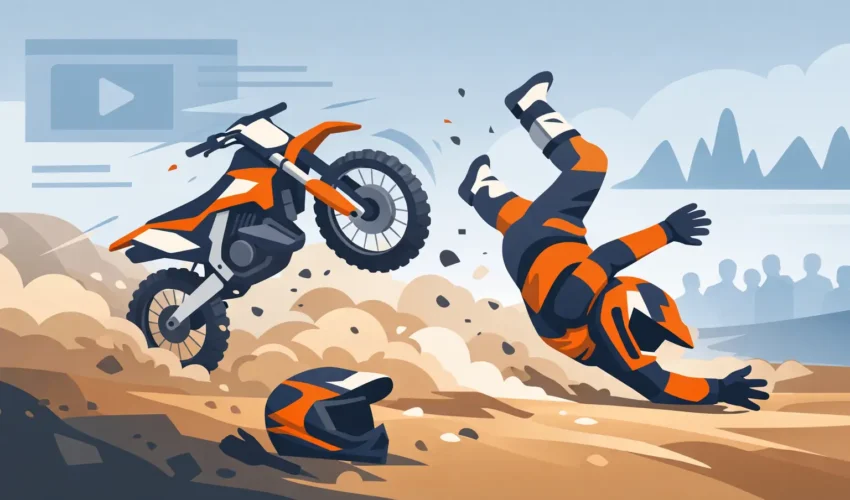

A rider clears a jump, lands slightly off-center, and suddenly the bike is swapping across the track at race speed. That split second is why motocross crash compilation videos pull viewers in. They are raw, fast, unpredictable, and packed with the kind of consequences that edited highlight reels usually leave out.
For motocross fans, a good crash compilation is not just a collection of painful moments. It shows how brutal the sport can be, how quickly conditions change, and why the best riders earn respect every time they line up at the gate. The biggest clips bring shock value, sure. The best ones also reveal control, recovery, track awareness, and the fine line between a spectacular save and a hard impact.
Why Motocross Crash Compilation Videos Get So Many Views
Motocross has built-in visual drama. Dirt flies, bikes move under riders like they have a mind of their own, and every jump creates a new chance for something to go wrong. A crash can happen because of a missed rut, a bad takeoff, a mechanical issue, another rider’s line, or one small body-position mistake that multiplies at speed.
That unpredictability makes these videos endlessly watchable. Viewers may know a crash is coming, but they do not know whether the rider will eject, save it with a foot dab, get launched into a berm, or somehow ride away. The anticipation lasts only a few seconds, but it hits hard.
There is also a real technical appeal. Dedicated riders do not watch only for the wreck. They watch the approach. Was the rider too far back? Did the front wheel land in a rut? Did the rear tire kick sideways off a braking bump? Was the jump face torn up? A clip that looks random to a casual viewer can be a full lesson in momentum, throttle control, suspension setup, and bad timing.
For casual fans, the appeal is simpler: motocross is high-speed action with no script. For experienced riders, the same footage can become a reminder that confidence needs to be backed by skill, conditioning, and respect for the track.
The Difference Between a Great Clip and Empty Shock Value
Not every crash video deserves attention. A strong compilation gives viewers enough context to understand what happened. It might show the corner entry, the jump face, the changing track surface, or the recovery afterward. That context turns a crash from random chaos into a moment with a story.
The most watchable edits also balance impact with variety. A 12-minute stretch of identical low-side crashes gets repetitive fast. Better compilations mix race starts, muddy ruts, failed whips, desert riding, practice-day mishaps, near misses, helmet-cam footage, and wild saves. They let the pace breathe without losing the energy that brought viewers there.
Respect matters too. There is a difference between showing the intensity of motocross and treating an injured rider like a punchline. The strongest creators know when to cut away, when to show a rider getting back up, and when to include a reminder that protective gear, medical support, and track rules are part of the sport.
A crash is entertaining because it is unexpected. It should not be entertaining because someone is seriously hurt.
The save can be better than the crash
Sometimes the clip everyone rewatches is not the impact. It is the save. A rider gets cross-rutted, the bike snaps sideways, and somehow they pull it back into line before the next jump. Those moments show elite reflexes in a way polished race footage cannot always capture.
Near-miss clips also make better repeat viewing because they reward attention. Watch the rider’s elbows, their weight over the pegs, the clutch work, or the tiny steering correction that keeps the bike upright. The video may last six seconds, but the skill behind it took years to build.
What Riders Can Learn From Crash Footage
Watching crashes is not a substitute for coaching or practice, but it can sharpen a rider’s instincts when viewed with the right mindset. Instead of asking, “How bad was that?” ask, “What happened before it went wrong?”
Look for patterns. Front-end washouts often begin with too much lean, poor body position, or a lack of traction on hardpack. Over-the-bars crashes can come from braking bumps, a wheel catching a rut, or landing nose-heavy. Cases on jumps may happen when a rider loses drive on the face or misjudges the transition. In deep sand, riders can get bucked when they hesitate or let the bike move too far underneath them.
The lesson is rarely one simple rule. Standing farther forward can help in one situation and create a problem in another. More throttle may stabilize a bike in a rut, while too much throttle can send the rear tire spinning into a slide. Track conditions, rider ability, bike setup, and fatigue all change the answer.
That is why the smartest way to watch is to study cause and effect. Notice the terrain, then notice the rider’s choices. The hard part of motocross is not memorizing one fix. It is reading changing conditions before they punish you.
Gear is part of the story
Most serious riders already know the basics: helmet, goggles, boots, gloves, knee protection, chest protection, and gear that fits correctly. Crash footage makes the value of that equipment impossible to ignore.
A helmet does not make reckless riding safe, and expensive gear does not replace technique. But proper protection can reduce the damage when the track fights back. Boots protect against twisted ankles and impacts. Knee braces or guards can add support. A neck brace may suit some riders and riding styles, while others prefer different mobility. The right setup depends on fit, comfort, discipline, and the type of riding being done.
The most useful takeaway is simple: ride within your ability, wear the protection you can actually ride comfortably in, and replace damaged gear instead of hoping it will hold up one more weekend.
Why Track Conditions Create the Wildest Moments
A motocross track is never static. A smooth morning lap can turn into a chopped-up survival test by afternoon. Braking bumps deepen, ruts form in corners, jump faces develop holes, and loose dirt gets pushed into unpredictable lines. Add rain, mud, dust, or a crowded gate, and the same section of track can demand a completely different approach every lap.
That change is a major reason crash compilations stay fresh. A rider can be technically strong and still get caught by a surface that changed since the previous lap. Mud races create spectacular slides because traction disappears without warning. Dry hardpack produces fast, sharp breakaways. Sand rewards commitment but punishes hesitation. Deep ruts can guide the bike beautifully until a front wheel climbs out at the wrong moment.
For viewers, this is where motocross becomes more than bikes flying through dirt. The track is an active opponent. Every rut, bump, and jump face has a say in what happens next.
Editing Crash Compilations Without Losing the Sport
Creators have a real opportunity with motocross footage because the sport delivers action naturally. But the edit still matters. Lead with a strong moment, then build variety around it. Keep clips long enough to show the setup and aftermath, especially when the action teaches something. Use clean sound when possible because engines, roost, and crowd reactions create more tension than exaggerated effects.
Avoid fake titles, recycled clips, and footage that appears to celebrate serious injury. Viewers may click once for a misleading “craziest crash ever” label, but they will not come back for more. Honest titles and sharp pacing build a stronger audience.
Community footage has a place here too. A local rider’s dramatic save, a muddy amateur race, or a backyard track moment can be just as compelling as professional action when the camera angle is clear and the clip has a real story. On a discovery-first platform such as VIDS24, that mix of pro-level speed and rider-submitted moments keeps the motorsports feed from feeling predictable.
The Real Reason We Keep Watching
Motocross crash videos remind people that speed has a price. Behind every rider charging a rough track is a constant series of decisions made in fractions of a second. The crashes are dramatic, but the resilience is what sticks: the rider checking the bike, shaking off the dirt, learning from the mistake, and lining up for another lap.
Watch the wild clips for the adrenaline. Watch them again for the skill, the lessons, and the respect they demand. Then let that respect follow you to the track, where smart riding makes the next great story more likely to end with a save than a siren.