
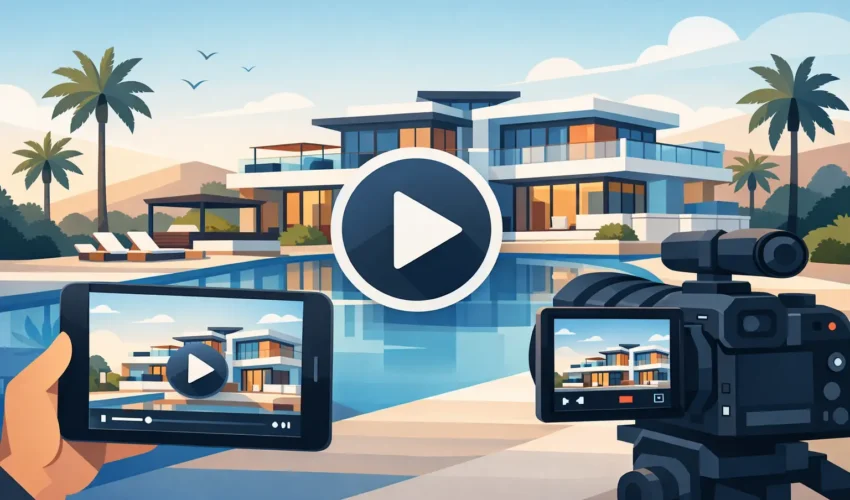

A $50 million home can have a bowling alley, a nightclub, and a garage full of supercars. None of that guarantees a great watch. The best mega mansion video tours do more than point a camera at expensive objects. They show how a property creates a feeling: the first reveal through the gates, the view framed at the end of a hallway, the garage door lifting on something loud and rare.
For viewers who love performance, luxury, design, and pure visual excess, these tours are a front-row pass to homes most people will never visit. They are also a surprisingly useful way to see what money can buy, where it gets wasted, and why some estates feel legendary while others feel like a giant showroom.
Why Mega Mansion Video Tours Pull Huge Views
A mega mansion is built for impact. The driveway is longer, the ceilings are higher, the materials are rarer, and the amenities are designed to trigger the question every viewer is thinking: Who actually lives like this?
That curiosity works because the footage delivers instant scale. A normal home tour might spend time on storage, appliance finishes, or room dimensions. At the ultra-luxury level, the stakes change. The kitchen has two islands because one is not enough. The pool appears to fall into the skyline. The primary suite may occupy an entire wing. A hidden room, wine vault, shooting range, spa, or underground car gallery can turn a predictable walkthrough into a shareable moment.
But spectacle is only part of the draw. Great property videos let viewers compare fantasy with function. A $100,000 chandelier might be impressive, but does it belong in the space? Is the house designed around the surrounding landscape, or is it trying to overpower it? Does the garage feel like a serious collector’s space, or simply expensive wallpaper for a listing photo?
That tension keeps the genre interesting. People are not just watching luxury. They are judging it.
The Details That Separate a Great Tour From a Price-Tag Parade
The strongest mansion footage has a point of view. It understands that the house is the star, but the story is what keeps viewers watching.
The arrival has to deliver
Every serious estate needs an opening sequence that establishes scale. That could be a drone shot over an oceanfront cliff, a climb through a gated mountain road, or a low camera angle rolling past a lineup of exotic cars. The arrival creates context before the front door ever opens.
A good tour then slows down. Rather than rushing through every room, it shows the transition from public spaces to private ones. You should understand where guests enter, where the owner can disappear, and how the indoor and outdoor areas connect. That is when a massive house starts to feel like a real place instead of a floor plan with a giant budget.
Design decisions matter more than expensive materials
Marble, glass, walnut, polished steel, and imported stone are common in this category. They photograph well. Yet a tour becomes memorable when it explains why those choices work.
Maybe the concrete walls keep a desert home cool. Maybe the dark wood balances a wall of ocean-facing glass. Maybe the lighting was planned to make a car collection look like a gallery at night. These details give viewers something better than a list of luxury finishes. They reveal the engineering, design confidence, and problem-solving behind the flex.
There is a trade-off, too. Ultra-minimal interiors can look incredible on camera but cold in everyday life. Huge open rooms may offer perfect sightlines while creating an echo problem. Floor-to-ceiling windows can make a home feel connected to the landscape, but privacy and heat management become serious concerns. The best hosts do not pretend every choice is perfect.
The lifestyle spaces make the tour shareable
The rooms that explode in clips are rarely the formal dining room. Viewers remember a two-story sneaker wall, an indoor basketball court, a private gym stacked with competition-grade equipment, a golf simulator, a rooftop bar, or a garage built for hypercars and motorcycles.
These spaces work because they connect luxury to passion. A car fan can picture the lift, lighting, detailing bay, and climate control required to protect a serious collection. A lifter notices whether the home gym has real equipment or just decorative dumbbells. A movie fan will look past the giant screen and notice the seating layout, acoustics, and entry design.
That is where mega mansion content crosses into the wider interests people already watch. The property is only one part of the show. Cars, training, tech, art, architecture, and the view all get their moment.
Watch the Home, Not Just the Hype
A fast-cut tour can make almost any expensive property look unbeatable. To get more from it, pay attention to the practical clues hiding behind the cinematic shots.
Look at circulation first. Can people move from the kitchen to outdoor entertaining areas without walking through private rooms? Is the garage convenient, or is it tucked away because the facade mattered more than daily use? Does the home have enough shade, storage, service access, and parking for the events it seems built to host?
Then look at the location. A huge home on the wrong lot can feel exposed, noisy, or disconnected. A slightly smaller estate with a protected waterfront, a city view that cannot be blocked, or direct access to trails can carry far more long-term appeal. Location is not glamorous to talk about, but it often explains why one mansion feels irreplaceable.
Finally, check whether the tour shows the less flashy systems. Smart-home controls, security, solar and battery infrastructure, water features, elevators, climate zones, and maintenance areas are not always thumbnail material. They are what determine whether an estate is a pleasure to operate or a full-time headache. At this level, a pool is not just a pool. It is equipment, energy use, staffing, and upkeep.
Why Some Mansions Feel Timeless and Others Age Fast
Trends hit luxury housing hard. One year, every high-end listing seems to have all-white interiors, floating staircases, black-framed glass walls, and a wine display under the stairs. The next year, those same features can make a home feel tied to a specific era.
Timeless properties usually have a stronger relationship with their setting. A modern Malibu house should make the ocean feel close. A mountain estate should frame the terrain without fighting it. A city penthouse should use height, light, and view corridors better than a suburban home ever could.
The same rule applies to amenities. A home theater can stay relevant. A flexible training space can adapt as an owner’s interests change. A garage with proper ventilation, security, and room to work has value beyond whatever vehicles are parked inside. By contrast, a theme-heavy nightclub or a gimmicky branded room may generate clicks today and become a renovation project tomorrow.
That does not mean outrageous features are bad. They are often the reason people press play. It simply means the most impressive mansion is not always the one with the longest amenities list. It is the one where the wild features still belong to the property.
The Best Tours Respect the Viewer’s Time
Luxury footage has a real pacing problem. Too much narration can bury the visuals. Too little context turns the video into a silent parade of doors opening and lights switching on.
The sweet spot is clear: establish the property, show the major spaces in a logical order, linger on the details that are genuinely rare, and explain the few numbers that put the house into perspective. Square footage matters. Acreage matters. But a host who can explain why a cantilevered deck was difficult to build, or why the garage has museum-level climate control, gives the viewer a reason to stay.
For creators submitting luxury content to platforms such as VIDS24, that approach can make a major difference. Lead with the strongest visual payoff, but support it with enough real detail to satisfy the viewers who know cars, architecture, fitness equipment, or high-end technology. The audience can spot empty hype fast.
The next time a mansion tour lands in your feed, do not stop at the infinity pool or the supercar lineup. Watch how the house works, what it says about the owner, and whether the biggest feature actually earns its space. That is where the best luxury videos become more than a fantasy – they become a great story worth passing along.