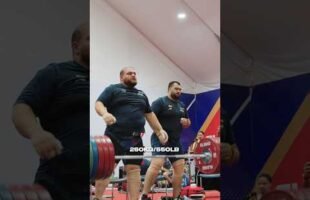
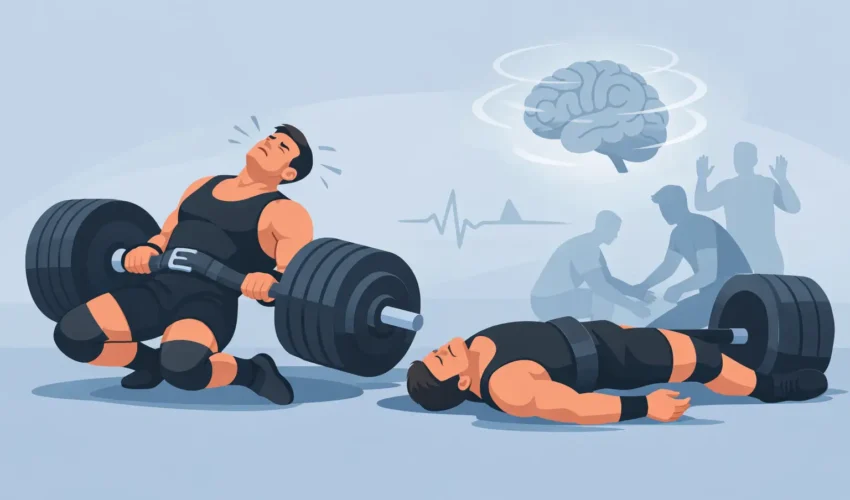

A loaded bar settles into a strongman’s hands, the crowd gets loud, and the athlete locks down every muscle in their body. Then the implement hits the ground – and, a second later, the athlete folds. It looks shocking on video, which is exactly why people ask: why do strongmen pass out? Usually, the answer is not weakness or a lack of toughness. It is the body hitting the limits of blood pressure control during an extreme effort.
A brief collapse after a deadlift, stone load, or overhead press can be a type of fainting called syncope or near-syncope. The athlete may come around quickly, look confused for a moment, and still be physically capable of walking off. But a blackout is never something to glorify. In strength sports, it is a warning that the athlete needs space, supervision, and an honest look at what happened.
Why Do Strongmen Pass Out? The Pressure Problem
The main culprit is often a powerful combination of breath-holding and bracing. To move enormous weight safely, strongmen create a rigid trunk by taking a huge breath and bearing down against their core. This is commonly called the Valsalva maneuver. It helps stabilize the spine and transfer force from the legs and hips into the implement.
That same brace can dramatically change pressure inside the chest and abdomen. For a short window, it can limit how easily blood returns to the heart. Blood pressure may spike during the strain, but when the effort ends and the athlete suddenly relaxes, blood pressure can drop hard. If the brain briefly gets less blood flow than it needs, vision tunnels, hearing fades, and the athlete may pass out.
The timing is the giveaway. Many strongmen do not lose consciousness at the absolute hardest instant of the lift. They black out just after lockout, after dropping the weight, or when they stand still following a heavy carry. The work is over, the brace releases, and the circulation has to catch up fast.
This is not simply “running out of oxygen.” Oxygen matters, but the immediate issue is usually blood flow and blood pressure. The brain is extremely sensitive to even a short interruption in adequate perfusion.
Extreme Events Stack the Odds
A maximal deadlift is brutal. A strongman medley can be worse because it adds speed, repeated efforts, awkward objects, heat, and fatigue. Loading stones, carrying a yoke, pressing a log, or pulling a truck asks the athlete to brace hard while moving under a massive total-body demand.
Several factors can make a blackout more likely:
- Long, hard breath holds: A quick brace is one thing. Straining through a long rep or a multi-step carry can amplify the pressure swing.
- Rapid position changes: Standing quickly after a low pick, then releasing the brace at the finish, can make lightheadedness hit harder.
- Heat and dehydration: Sweat loss reduces circulating fluid volume, making it tougher for the body to maintain blood pressure.
- Fatigue and insufficient recovery: Competition days often involve multiple maximal events, limited rest, travel, poor sleep, and a nervous system already running hot.
- Food, stimulants, and supplements: Skipping meals, relying on caffeine, using unfamiliar pre-workout products, or managing body weight aggressively can all complicate how an athlete feels and performs.
Not every fainting episode has the same cause. Some athletes may be more prone to a reflex drop in heart rate or blood pressure. Others may have an underlying medical issue that only becomes obvious under heavy exertion. That is why “it happens in strongman” is not a complete explanation.
The Big Bodyweight Trade-Off
Strongman rewards size, leverage, strength, and the ability to absorb punishment. Bigger athletes may be able to move objects that would not budge for ordinary lifters. But greater body mass also means more heat production, more cardiovascular workload, and often more stress during repeated high-intensity efforts.
That does not mean large athletes are destined to pass out, or that lighter competitors are protected. It means the margin for error can narrow when huge bodyweight, high blood pressure, sleep apnea, dehydration, and maximal exertion overlap. An athlete who looks invincible on a 900-pound pull can still be vulnerable after the down command.
This is also why viral clips can be misleading. A 10-second video captures the dramatic fall, not the athlete’s hydration, event schedule, medical history, prior attempts, or whether they had been feeling off all day. Spectacle is part of strongman. Context is what keeps it from becoming reckless.
Passing Out Is Not a Training Goal
Some lifters treat dizziness after a massive PR like proof they gave everything. That mentality needs a hard boundary. A clean lift is a win. Waking up on the floor is not an advanced badge of honor.
Coaches and training partners should watch athletes closely after maximal sets, especially during deadlifts, squats, overhead work, and carries. The safest immediate move after a hard effort is often to keep moving lightly or sit down in a controlled spot if dizziness starts. Do not wander away alone, jump into a vehicle, or try another max attempt because the crowd is fired up.
Spotters and event staff should also make the area safe. A fainting athlete can strike their head on a bar, stone, rack, concrete, or another implement. If someone loses consciousness, protect them from additional injury, check whether they are responsive and breathing normally, and get qualified medical help on site. Do not rush them upright.
How Strongmen Reduce the Risk
The goal is not to eliminate bracing. Heavy bracing is a core skill in strength sports. The goal is to use it with discipline, train it progressively, and avoid piling avoidable stress on top of it.
Experienced athletes practice breathing and bracing with submaximal loads before they need it on a contest-day monster. Depending on the event, they may reset their breath between reps, avoid holding one breath longer than necessary, and use a controlled release rather than instantly going loose at lockout. The exact strategy depends on the lift, the athlete’s technique, and coaching guidance.
Preparation off the platform matters just as much. Hydration, electrolytes when conditions warrant them, adequate carbohydrates, sleep, and sensible warm-ups all support performance. So does treating caffeine like a tool rather than a personality trait. More stimulants are not automatically more power, especially when an athlete is overheated, underslept, anxious, or underfed.
Smart programming helps, too. A strongman does not need to hit true all-out attempts every session to become dangerous on game day. Building event skill, conditioning, and recovery capacity gives the body more room to handle high-output work. The most impressive athletes are not just strong enough to make one clip. They are prepared enough to perform again next weekend.
When a Blackout Needs Medical Attention
Any loss of consciousness during exercise deserves serious attention, particularly if it is new, repeated, or unexplained. Athletes should stop training and seek prompt medical evaluation if fainting comes with chest pain, palpitations, unusual shortness of breath, a severe headache, seizure-like movements, prolonged confusion, or an injury from the fall.
A blackout that happens during the exertion itself, rather than immediately after it, can be especially concerning. So can a family history of sudden cardiac death, known heart disease, high blood pressure that is not well controlled, or use of substances that affect the heart and blood pressure. This is not a situation for comment-section diagnosis or a teammate saying, “You just need more air.”
For viewers, the takeaway is simple: respect the risk behind the spectacle. Strongman is built around extraordinary people doing extraordinary things, but the best footage still comes from an athlete who finishes the lift, recovers under control, and is ready to chase the next big moment safely.