

A hawk folding its wings at full speed. A bull elk charging through snow. A tiny octopus changing color against a reef in seconds. The best wildlife videos do not need a fake countdown or a screaming headline to earn attention. Nature already brings the pressure, the power, and the surprise.
For viewers, these clips offer a break from staged entertainment without sacrificing intensity. For creators, they present a tougher challenge: getting close enough to capture a real moment while staying far enough away to leave the animal and its habitat alone. That balance is what separates a great wildlife clip from a forgettable one.
Why Wildlife Videos Hit So Hard
Wild animals do not repeat a take. A predator may miss, a bird may launch before the camera is ready, and a calm scene can turn into a fight for territory without warning. That unpredictability creates real stakes. Even a short clip can hold the kind of tension people expect from a motorsports start or a close round in the cage.
The subject matter also has range. Some viewers want the raw force of bison, bears, big cats, and crocodiles. Others come for strange behavior: crows solving problems, cuttlefish flashing patterns, raccoons figuring out how to open a container. There is room for awe, comedy, speed, survival, and pure animal weirdness in the same category.
That variety matters on a discovery-focused platform. Someone who clicks on a wolf pack moving through deep snow may next watch an eagle snatch a fish from a river or a slow-motion hummingbird hover at a feeder. The throughline is not one species. It is the feeling that something remarkable could happen at any second.
What Makes a Wildlife Clip Worth Watching
Spectacle helps, but scale alone is not enough. A distant video of a lion sleeping has value for researchers or serious animal fans, yet it may not hold a general audience for long. A strong entertainment clip gives the viewer a clear visual reason to stay.
A moment that reads instantly
The first few seconds should make sense even with the sound off. The animal is running, defending a nest, carrying food, making an unusual call, or interacting with another animal. Viewers should not have to wait through a long stretch of shaky scenery to understand why the footage matters.
This does not mean every video needs an attack, chase, or dramatic rescue. A baby elephant learning to use its trunk can be just as compelling when the framing is tight and the action is clear. Funny and tender moments often travel farther than creators expect because they are easy to share with almost anyone.
Framing that shows behavior, not just an animal
A clean shot respects both the audience and the subject. Viewers want to see what the animal is doing, where it is moving, and what it is reacting to. Wide footage can establish the landscape, but closer framing should reveal behavior: the ears pinned back before a charge, a fox listening beneath the snow, or a lizard extending its throat fan.
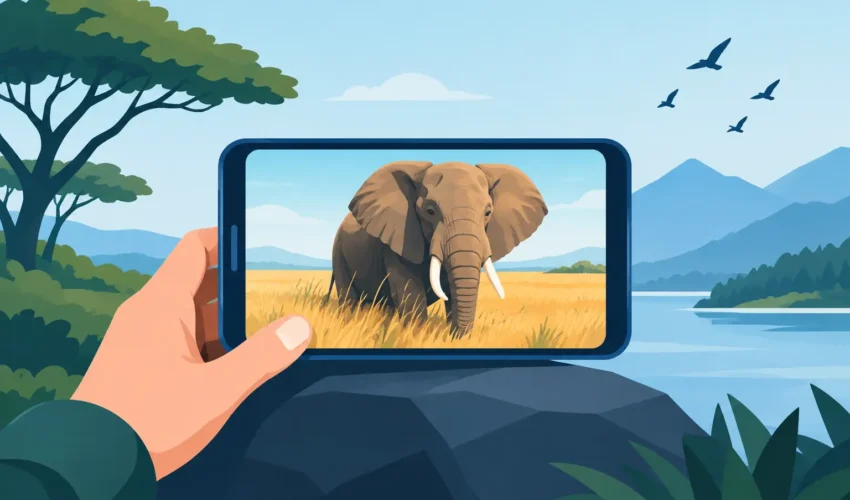
If the footage is captured from a safe public distance with a long lens, say so when that context improves trust. It reminds viewers that a dramatic encounter does not require crowding wildlife. The best angle is never worth stressing an animal, blocking its route, or putting people at risk.
Context that adds tension
A concise description can turn an impressive clip into a story. Identify the species when possible, name the location broadly if sharing it will not expose a sensitive habitat, and explain the behavior without pretending to know more than the footage proves.
For example, it is better to say a ram appears to be defending space during the rut than to claim it is definitely protecting a mate. Wildlife behavior can be complex. A little restraint makes a creator look more credible, and it keeps viewers from learning the wrong lesson from a dramatic scene.
The Big Trade-Off: Excitement Versus Respect
Wildlife content has an obvious temptation. The closer the animal appears, the more intense the thumbnail looks. But proximity is not proof of skill, and it can be a warning sign. Animals that seem calm may be stressed, habituated to people, cornered, injured, or preparing to defend themselves.
There is no single rule that covers every species and setting. A whale filmed legally from a licensed boat operation is different from a bear filmed on a hiking trail. A nesting bird requires different care than an alligator viewed from a designated boardwalk. Local regulations, park rules, weather, breeding season, and the animal’s body language all matter.
The practical standard is simple: never chase the shot. Do not feed an animal to create a scene, use calls to pull it closer, separate young from adults, block a path, or get between an animal and food, water, shelter, or offspring. If an animal changes direction because of you, freezes, vocalizes, stares, flattens its ears, or starts posturing, back off.
This approach does not make content less exciting. It makes the footage better. A creator who understands animal space is more likely to capture natural behavior over time, instead of one reckless encounter that puts everyone in danger.
Building Wildlife Videos Viewers Actually Finish
A good edit should heighten the real moment, not manufacture one. Cut dead time at the start, but leave enough lead-in for viewers to understand what is happening. If a heron strikes at a fish, show the stillness before the strike. That pause is part of the payoff.
Avoid misleading labels that turn every animal interaction into a “deadly battle.” Animals often play, posture, test boundaries, defend resources, or move through the same space without a fight. A title can still be bold while staying honest: “Moose Stops Traffic on a Snowy Road” is stronger than a vague claim that overpromises chaos.
Sound can carry a clip when the image is steady. Wingbeats, elk calls, rain on leaves, surf, and distant howls bring viewers into the scene. If wind or crowd noise overwhelms everything, a short caption explaining the action may be more useful than adding overdone music.
For creators submitting clips, basic details go a long way: species, region, season, and the key behavior. Keep location details broad when the subject is rare, vulnerable, or commonly disturbed. A memorable video can build an audience, but it should not direct a crowd toward a nest, den, or breeding ground.
Wildlife Is Not Just the Big Animals
The usual headliners earn clicks for a reason. Wolves, sharks, mountain lions, bald eagles, and massive bull elk bring instant visual power. Still, some of the strongest clips come from animals people overlook.
A praying mantis catching prey, a beaver rebuilding a dam, a spider wrapping an insect, or an urban falcon hunting between buildings can be just as absorbing as a safari encounter. Smaller animals often make better close-range subjects because they can be observed without invading their space. They also reveal the mechanics of survival in a way a distant big-game shot cannot.
Urban wildlife deserves attention too. Coyotes crossing an empty parking lot at dawn, peregrine falcons nesting on city structures, and deer navigating suburban backyards show how adaptable animals can be. These clips work best when they avoid treating wild animals like mascots. The point is to observe, not encourage people to approach or feed them.
Find the Next Remarkable Moment
The wildlife category rewards curiosity. Watch for speed and strength, but also look for patience, camouflage, teamwork, odd habits, and the split-second decisions animals make every day. A clean 20-second clip of an osprey lifting a fish can beat five minutes of unfocused footage.
VIDS24 gives viewers a place to chase those moments across a broader feed of action and spectacle, while creators have another outlet for footage that deserves to be seen. Bring the drama, keep the facts straight, and let the animal stay wild. The next clip people share may be waiting in a backyard, on a trail, above a river, or just beyond the edge of the frame.