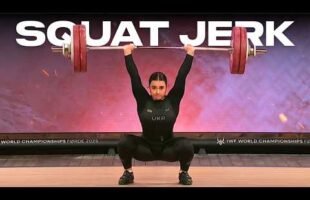

A 700-pound deadlift pulling off the floor, a clean and jerk saved overhead, a bodybuilder grinding out a final rep – weightlifting videos make hard training impossible to ignore. The best clips do more than deliver a hit of adrenaline. They give you a clearer eye for technique, effort, programming, and the long road behind an impressive lift.
But a viral lift is not automatically a training plan. The difference between useful viewing and mindless scrolling comes down to what you watch, why you watch it, and what you carry into your next session.
Why Weightlifting Videos Hit So Hard
Strength is visual. You can see a bar bend, a lifter brace, plates rattle, and a room go silent before the hardest part of the attempt. Even without a word of explanation, a great lift tells a story about pressure, preparation, and commitment.
That is why competition highlights, garage-gym PRs, Olympic lifting sessions, strongman events, and bodybuilding workouts all pull viewers in. They show a level of physical output most people never see up close. For beginners, that can make lifting feel possible. For experienced athletes, it can restart the competitive fire after a flat week of training.
The catch is that spectacle compresses reality. A 20-second highlight rarely shows the warm-up, the missed attempts, the mobility work, the coach’s corrections, or the years spent building tolerance to heavy loading. Watch for motivation, absolutely. Just do not confuse a peak moment with an everyday prescription.
The Weightlifting Videos Worth Your Time
Not every lifting clip needs to teach you something. Sometimes the point is simply to watch an athlete do something outrageous. Still, if you want your viewing to make you a better lifter, rotate between entertainment and content with a job to do.
Competition footage shows real pressure
Meet and event footage is one of the best places to study execution under stress. Watch how powerlifters set up before a squat, bench press, or deadlift. Notice how Olympic lifters approach the bar, reset after a miss, and handle attempts that could decide a podium.
Competition lifts are not always textbook-perfect. They do reveal what holds up when the stakes are high: a repeatable setup, controlled breathing, a consistent walkout, and the ability to commit. Compare multiple successful attempts from the same athlete instead of treating one spectacular rep as the whole lesson.
Technique breakdowns help you see details
A smart coaching video slows the action down and gives you a few clear checkpoints. For a deadlift, that could mean bar position over the midfoot, full-body tension before the pull, and a controlled lockout. For a snatch or clean, it may focus on keeping the bar close, meeting it fast, and receiving it in a stable position.
Good breakdowns explain the reason behind a cue. “Keep your chest up” may help one lifter stay organized, while another needs to focus more on bracing or balance. A cue is a tool, not a law. If a creator presents one position as the only acceptable way for every body type and goal, keep watching with a little skepticism.
Training footage reveals the work between big lifts
The most useful gym videos often include the boring-looking parts: warm-up sets, accessories, rests, failed reps, and lighter technical work. That is where sustainable strength is built.
Pay attention to load selection and volume. An athlete might pull a massive single for the camera, then spend most of the session on rows, hamstring work, and submaximal pulling. That context matters far more than copying the one lift that got clipped and shared.
Athlete stories give progress a timeline
A transformation, comeback, or first-competition video can be more valuable than another montage of max attempts. These stories show that strength changes slowly, often unevenly. They also make room for injuries, schedule conflicts, confidence issues, and the reality that progress sometimes means rebuilding.
For a platform built around big performances and niche passions, VIDS24 is a natural place to browse across lifting, bodybuilding, combat sports, and other high-output pursuits. The fun is in the range, but your own goal should decide what earns a place in your training notes.
How to Watch Like a Lifter, Not Just a Fan
The fastest way to turn a video into something useful is to choose one thing to study before you hit play. Do not try to copy an entire athlete. Pick a single moment: the brace before a squat, the pause off the floor, the bar path in a press, or the timing of a clean catch.
Watch the lift once at full speed. Then replay it and focus on the setup. Where are the feet? How close is the bar? Does the lifter create tension before the rep begins? On the third viewing, follow the bar and ask whether the athlete stays balanced through the hardest point.
This approach works especially well when watching lifters built differently from you. A taller deadlifter and a compact deadlifter may use noticeably different starting positions. A wide-grip bencher may not look like a close-grip bencher. The shared principle is usually stability and force, not identical angles.
If the video includes a coach’s explanation, compare the words with the footage. Do the cues match what you can actually see? Can you test the idea at a light weight in your next session? If not, it may be entertainment, personality, or advanced context rather than a cue you need right now.
Do Not Copy the Highlight Reel
High-level lifters can get away with choices that would bury a newer trainee. They may have years of tissue adaptation, excellent recovery, specialized equipment, medical support, or a competition date that justifies taking more risk. A camera also tends to capture their best day, not the rough sessions that came before it.
Be especially careful with max-out challenges, forced reps, aggressive range-of-motion shortcuts, and “one weird trick” claims. Heavy lifting has a place. Grinding every rep does not. A training video that makes you feel weak unless you are exhausted, screaming, or loading more weight is selling a mood, not necessarily a method.
The better question is simple: does this fit my experience, current program, equipment, and recovery? If the answer is unclear, use the clip for inspiration and keep your planned work intact.
Build a Smarter Lifting Feed
Your feed shapes your training expectations. If every clip is a record attempt, normal productive work can start to feel disappointing. Add variety so your viewing includes technique, competition, accessories, mobility, nutrition basics, and athletes at different stages of development.
A balanced mix also keeps lifting interesting. Watch an Olympic lifter for speed under the bar, a powerlifter for patient setup, a bodybuilder for muscle control, and a strongman for work capacity. You do not need to train like all of them. You can still learn from how each discipline attacks its own problem.
It helps to save videos with a purpose. Keep one small collection for form ideas, another for motivation, and another for workouts you may want to adapt later. Before trying any saved session, strip it down to match your level. Fewer sets, lighter loading, longer rest periods, or a simpler movement variation can turn a pro-level workout into something useful.
For Creators: Film What Viewers Cannot See
The clips people replay usually have a clear payoff: a massive lift, a dramatic save, a visible transformation, or a hard-earned personal record. But creators who want repeat viewers should show enough context to make the payoff mean something.
A short caption that names the lift, load, rep target, and training goal gives viewers a reason to care beyond the number of plates. Side angles can make bar path and depth easier to judge. A quick follow-up after a miss can be just as compelling as the successful attempt because it shows how an athlete responds when the lift does not go to plan.
Safety and honesty build a stronger audience than fake intensity. If a set is assisted, edited, unusually risky, or performed under competition rules, say so. Lifters notice details, and they respect creators who do not hide them.
The next time a huge lift stops your scroll, enjoy it. Then replay the setup, find one detail worth testing, and earn your own version of that moment one controlled rep at a time.