
A calf cramp can hit like a switch flip: one second you are pushing through a hard set, sprinting uphill, or sleeping peacefully, and the next your muscle is locked in a painful knot. Why muscles cramp is not always a one-answer question. Sometimes it is the predictable cost of doing more than your body is ready for. Other times, it is a signal worth taking seriously.
For lifters, runners, fighters, weekend athletes, and anyone who has woken up grabbing a calf at 3 a.m., the goal is not just to make the pain stop. It is to understand the likely trigger, recover smart, and keep the next cramp from wrecking training or sleep.
What a Muscle Cramp Actually Is
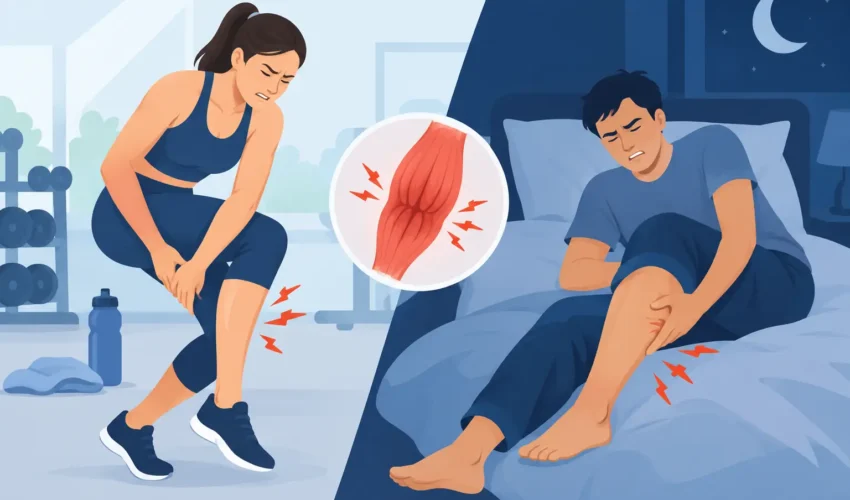
A muscle cramp is a sudden, involuntary contraction that you cannot relax on command. The muscle may feel hard, bunched up, and intensely sore. Cramps often strike the calves, feet, hamstrings, quads, hands, or abdominal muscles, and they can last from a few seconds to several minutes. Tenderness can hang around afterward.
A cramp is different from the ordinary burn of a high-rep set. That burn usually fades as you rest. A true cramp makes the muscle seize, and trying to force the movement can make it worse.
Most cramps are harmless, especially when they happen after unusual exertion or in the middle of the night. But frequent, severe, or unexplained cramps deserve more attention, particularly if they come with weakness, swelling, numbness, or other changes.
Why Muscles Cramp During Hard Training
The most common sports-related explanation is neuromuscular fatigue. In plain terms, your muscle and nervous system are working near their limit. The control signals that tell a muscle to contract and relax can get temporarily out of balance, making a cramp more likely.
That is why cramps often show up late in a brutal workout, during the final rounds of a sparring session, on the last hard climb of a ride, or when you add a big jump in volume. The issue is not always that you are out of electrolytes. It may simply be that the demand exceeded your current conditioning.
Training load matters. A lifter who suddenly adds high-rep leg work, a runner returning after time off, or a martial artist doing extra rounds in hot conditions has raised the risk. Muscles cramp more readily when they are fatigued, shortened, overloaded, or being asked to work in an unfamiliar range of motion.
Technique can play a role too. Pointing the toes hard while swimming, gripping a bar with more tension than necessary, or repeatedly training through poor mobility can put a muscle in the exact position where it wants to lock up.
Heat, Sweat, and Fluid Loss
Hot, humid conditions make the problem more complicated. Heavy sweating means fluid loss, and sweat also carries sodium away. If you start a workout underhydrated, keep sweating, and replace nothing, cramping becomes more likely for some people.
Still, the popular idea that every cramp means you need potassium is too simple. Electrolytes matter, especially sodium for long, sweaty sessions, but a cramp can happen even when blood electrolyte levels are normal. Chugging random supplements after every twitch is not a complete strategy.
For long outdoor sessions, hard conditioning blocks, or training in serious heat, plan your fluids and sodium intake before the workout gets ugly. The exact amount depends on your sweat rate, body size, climate, duration, and what you have eaten that day. Someone doing a 45-minute indoor lift has different needs than someone riding for three hours in summer heat.
Night Cramps Have Different Triggers
Nighttime leg cramps are common, and they can happen even if you did not train that day. They often affect the calf or foot and may become more common with age, pregnancy, long periods of sitting, or changes in activity.
A tough lower-body session can leave the muscles more vulnerable overnight, but daytime habits count too. Long drives, desk work, standing for hours, restrictive footwear, and not moving through a full range of motion can all contribute. Some people notice cramps after sleeping with their toes pointed down, which shortens the calf for hours.
Medication is another possible factor. Diuretics, some cholesterol-lowering medications, certain asthma medicines, and other prescriptions may contribute to cramping in some people. Do not stop a prescribed medication because of cramps without speaking with the clinician who prescribed it. A medication change may be appropriate, but that decision needs medical guidance.
What to Do When a Cramp Hits
The move is simple but not always easy: stop the activity, then gently lengthen the cramped muscle. Do not try to power through a cramp with another rep, another sprint, or a sudden aggressive stretch.
For a calf cramp, straighten the knee if you can and pull your toes toward your shin. For a hamstring cramp, carefully straighten the leg and hinge forward only as far as feels tolerable. Light massage can help the muscle release. Once the cramp eases, walk slowly or move the joint through a comfortable range instead of jumping right back into max effort.
Heat can feel good for a tight muscle after it releases, while a cool pack may help if the area remains sore. Drink fluids if you have been sweating heavily, and eat a normal meal or snack if you have not fueled for hours. There is no magic rescue drink that instantly fixes every cramp, but replacing what a hard session took out of you is sensible recovery.
How to Lower Your Odds of Cramping
The strongest defense is not a single supplement. It is preparation that matches the work you are asking your body to do.
Build volume progressively. If you have been lifting twice a week, do not suddenly stack six days of high-volume training. If a hot-weather event is coming, acclimate with shorter sessions rather than going from air conditioning straight into an all-out effort.
Train the positions that cause trouble. If your calves cramp during jumps, hill runs, or combat-sports footwork, include controlled calf raises, ankle mobility, and gradual exposure to those demands. If your hamstrings cramp during deadlifts, review loading, warm-up sets, bracing, and whether fatigue is breaking down your setup.
Hydrate consistently instead of trying to make up for a full day of low fluid intake five minutes before training. For sessions with lots of sweat, include sodium through food, a sports drink, or an electrolyte product that fits your needs. Be cautious with high-dose supplements, especially potassium, unless a clinician has advised them. More is not automatically better.
Sleep and recovery matter more than most highlight-reel workouts suggest. Hard training, poor sleep, alcohol-related dehydration, and inadequate fueling can create the kind of fatigue where cramps become more likely. A serious performance plan includes rest days and enough carbohydrates, protein, and overall calories for the workload.
When Cramps Need Medical Attention
Get urgent medical care for severe cramping with chest pain, trouble breathing, confusion, fainting, major weakness, or signs of heat illness such as hot skin and altered mental status. Those are not situations to stretch out and hope for the best.
Make a non-urgent medical appointment if cramps are frequent, worsening, disrupting sleep regularly, starting after a new medication, or happening without clear exercise or activity triggers. Also get checked if there is persistent swelling, redness, numbness, muscle weakness, or dark urine after extreme exertion. Those symptoms can point to issues beyond an ordinary cramp.
Some medical conditions affecting circulation, nerves, kidneys, thyroid function, or blood sugar can be associated with cramping. The point is not to assume the worst. It is to avoid writing off a repeating pattern that your body keeps sending.
The next time a muscle locks up, treat it as useful feedback. Ease it out, recover, then look honestly at the load, heat, hydration, fuel, and sleep behind it. The best training clips are built on hard effort, but the athletes who stay in the game know when their body is asking for a smarter plan.