
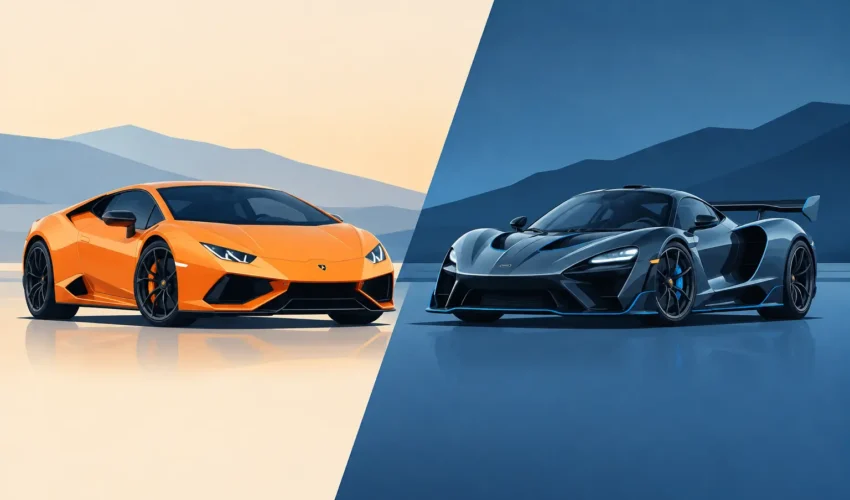

A 1,000-horsepower launch looks insane on a phone screen. But the supercar versus hypercar debate is about far more than a huge speedometer number or a carbon-fiber wing. Both are built to turn heads, light up comment sections, and make ordinary traffic look painfully slow. The difference is how far each machine pushes performance, technology, exclusivity, and price.
A supercar is already an exotic object. A hypercar is the rare machine that makes the supercar crowd stop filming and stare.
Supercar Versus Hypercar: The Core Difference
There is no government rulebook that officially stamps one car a supercar and another a hypercar. These are enthusiast terms, which means there will always be arguments around the edges. Still, the distinction is clear when you look at the full package.
A supercar is a high-performance, high-style road car that sits far beyond normal sports cars. Think low seating position, dramatic bodywork, serious braking power, major acceleration, and a price that puts it in a different universe from a Corvette, Porsche 911, or BMW M car. Examples often include the Lamborghini Huracan, Ferrari 296 GTB, McLaren Artura, and Maserati MC20.
A hypercar goes after a bigger target. It is usually built to reset expectations for what a road-legal vehicle can do. It may chase a top-speed record, deliver race-car-grade aerodynamics, introduce a new hybrid system, or use materials and engineering that would be wildly impractical in an ordinary production car. The Bugatti Chiron, Rimac Nevera, Ferrari LaFerrari, McLaren P1, Porsche 918 Spyder, Koenigsegg Jesko, and Aston Martin Valkyrie all live in this territory.
The simple version: supercars are extreme. Hypercars are extreme with almost no compromise and almost no production volume.
Performance: Fast Is Only the Starting Point
A modern supercar can be brutally quick. Many run from 0 to 60 mph in around three seconds, and some do it faster. They have enough power and grip to overwhelm most public roads, which is why a clean launch-control clip from one can pull huge views.
Hypercars do not merely add horsepower. They often combine enormous power with a system-level approach to speed. Electric motors may fill gaps in engine response. Active aero can change the car’s shape as speed rises. Sophisticated traction management can deploy four-figure horsepower without instantly turning the rear tires into smoke.
The Rimac Nevera is a perfect example of the new hypercar mindset. It is electric, massively powerful, and engineered around repeatable, data-driven performance rather than just a dramatic engine note. A Bugatti takes a different route, using a giant multi-cylinder combustion engine and relentless high-speed stability. The hardware differs, but the ambition is the same: build something that feels like it arrived early from the future.
That said, top speed does not settle the argument. A hypercar can be less engaging than a lighter, louder supercar on a tight mountain road. A naturally aspirated Lamborghini or a mid-engine Ferrari may give a driver more theater at legal-ish speeds, while a hypercar can feel like its real abilities belong on a runway or a racetrack.
Horsepower Is Not the Whole Story
It is easy to see a 1,500-horsepower rating and call it a win. But power only matters if the chassis, tires, cooling, brakes, and aerodynamics can manage it. Hypercars tend to make those supporting systems central to the project.
A supercar might use adaptive dampers, carbon-ceramic brakes, and a dual-clutch transmission. A hypercar might add active suspension, torque vectoring at each wheel, movable aerodynamic surfaces, a bespoke carbon monocoque, and software written around every component. That is why two cars with similar horsepower figures can feel completely different at speed.
Engineering: Where Hypercars Get Serious
The biggest gap in the supercar versus hypercar conversation is usually engineering ambition. A supercar manufacturer needs to balance performance with production cost, emissions requirements, daily usability, and enough volume to make business sense.
A hypercar program can be closer to a rolling laboratory. Its creators may spend years developing a new powertrain or finding a way to shave pounds from the chassis. Some hypercars use 3D-printed parts, exotic composites, motorsport-derived suspension, or bodywork shaped first by computational fluid dynamics and only later by a designer’s eye.
The Aston Martin Valkyrie shows how blurred the line can become between a road car and a race machine. Its cockpit, aero philosophy, and driving position make it a demanding experience. It is spectacular because it refuses to behave like a normal luxury product.
That refusal has a cost. Hypercars can run hot, sit low, attract attention everywhere, and require specialized maintenance. Some are difficult to enter, harsh on rough pavement, and expensive to insure even for buyers who can afford the sticker price. The engineering is extraordinary, but the ownership experience can be a commitment rather than a convenience.
Rarity and Price Change the Game
Most supercars are exclusive by normal standards, but they are still production vehicles. You may see several at a major cars-and-coffee event or pull up next to one outside a high-end restaurant. Manufacturers often produce them for multiple years, with variations, special editions, and healthy used-car markets.
Hypercars are commonly limited to dozens or a few hundred examples. Some are allocated before the public fully sees them. Ownership may depend on brand relationships, collector history, or an invitation. In certain cases, the buyer is effectively joining a private club with access to factory events, track support, and direct contact with the company.
Price follows scarcity and development costs. A new supercar can range from the high six figures into the low seven figures for limited models. Hypercars often start well above $1 million, and the rarest cars can climb far higher before options, taxes, transport, and maintenance enter the picture.
The purchase price is only one part of the story. Tires, brake components, service intervals, transport, storage, and insurance can turn ownership into a serious annual expense. A hypercar may also need factory technicians or approved facilities for work that a high-end local shop could handle on a supercar.
Which One Is Better to Watch and Drive?
For pure spectacle, hypercars are hard to beat. They bring record attempts, active-wing movement, impossible acceleration, and the kind of limited-production backstory that makes every sighting feel like an event. On a video platform such as VIDS24, a Jesko top-speed run or Nevera drag race has instant replay value because the numbers barely seem real.
For driving, the answer depends on what you want from the car. A supercar is often the better choice for someone who wants to use it. It may have front-lift for driveways, more luggage space, less temperamental cooling, and a setup that makes weekend back-road runs feel exciting instead of stressful.
Hypercars make more sense for collectors, dedicated track drivers, and buyers who want a landmark machine. They are often purchased as much for their place in automotive history as for their ability to commute. The right hypercar can be an engineering statement, an investment-grade collectible, and a rolling piece of visual chaos all at once.
The Line Is Moving Faster Than Ever
Technology keeps moving the goalposts. A decade ago, hybrid power and 900 horsepower sounded hypercar-level. Now, some supercars use hybrid assistance and approach those output figures. Electric performance cars have made violent acceleration more accessible too.
That means the label will keep getting harder to pin down. A limited, million-dollar supercar may outperform an older hypercar in several measurable ways. Yet it may still lack the rarity, innovation, cultural impact, or no-compromise design that gives a hypercar its status.
The best way to judge either category is not to chase one number. Watch how the car launches, brakes, corners, sounds, and behaves when the road gets rough. The real magic is in the full experience: the engineering under the skin, the drama in the cabin, and the moment a machine built without ordinary limits hits the throttle.