
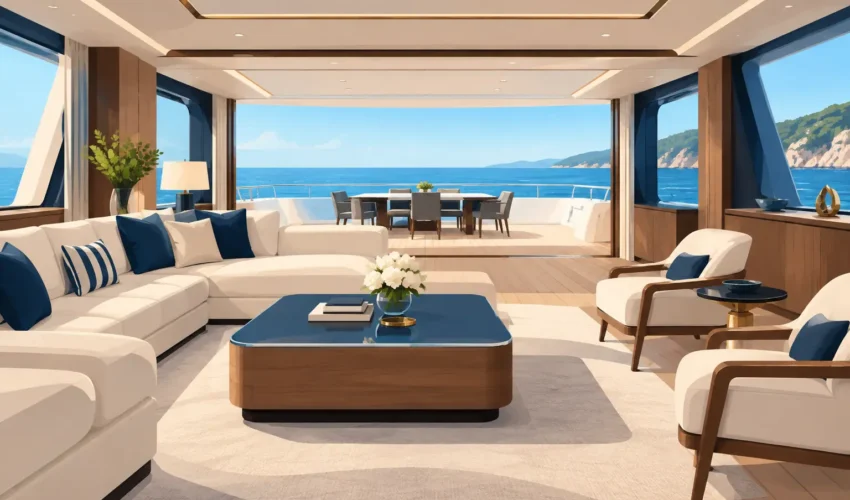

A superyacht can have a helipad, a towering mast, and enough power to outrun a storm line, but the real knockout punch is usually inside. The top luxury yacht interiors are not just expensive rooms placed on water. They are engineered experiences: beach clubs that open at the push of a button, salons framed by floor-to-ceiling glass, and owner suites designed to make a five-star hotel feel ordinary.
For anyone who watches yacht tours for the same reason they watch supercar launches, this is where the spectacle gets serious. The exterior gets the first click. The interior is what keeps the camera rolling.
What Makes Top Luxury Yacht Interiors Different?
Space is the ultimate flex on a yacht because it is also the hardest thing to create. Every lounge, staircase, wine wall, and oversized sofa must fit within a moving structure that deals with weight distribution, vibration, humidity, salt air, and constantly changing light. A mansion on land can spread out. A yacht has to make every square foot earn its place.
That limitation is why the best interiors feel so impressive. Designers use sightlines to make narrow spaces feel open, conceal technical equipment behind beautiful panels, and create transitions that pull the eye from the main salon to the sea. You might see pale oak, brushed metal, sculptural lighting, and Italian stone, but the real skill is making those materials work aboard a vessel that moves.
There is also a major difference between luxury and visual overload. Some owners want high-gloss marble, mirrored ceilings, gold accents, and a nightclub atmosphere. Others want a warm, quiet refuge with natural wood, linen textures, and a view doing most of the work. Neither approach is automatically better. The strongest interiors commit to a clear personality instead of trying to display every expensive finish available.
The Beach Club Is Now the Main Event
Years ago, the lower deck was mostly a place for tenders, water toys, and crew operations. On many modern yachts, it has become the social center of the entire boat. Fold-down platforms extend toward the water, creating a floating terrace with loungers, a bar, gym equipment, and direct access for swimming, diving, or launching a Sea-Doo.
This is the part of a yacht tour that delivers instant video payoff. A transom door drops, side platforms unfold, and what looked like a clean rear profile becomes a private resort at water level. Some beach clubs add glass panels that bring in underwater light. Others use a pool, hot tub, steam room, or massage space to turn the aft deck into an all-day hangout.
The trade-off is practical. A giant beach club can consume space that might otherwise go to a garage, cabins, or technical systems. It also needs serious engineering to stay safe and comfortable when the yacht is underway. But for owners who spend most of their time anchored in warm water, it is hard to beat.
Glass, Water, and the Best Seat on Board
The newest move in yacht design is less about adding decoration and more about removing barriers. Glass-sided lounges, skylights, oversized sliding doors, and open-plan main decks put the ocean into the interior instead of treating it as a backdrop.
A well-positioned main salon can feel almost suspended over the water. During the day, it floods with natural light. At night, interior lighting reflects off black water and turns the room into something cinematic. That visual drama is why clean, modern interiors often outperform more ornate spaces on camera.
Still, more glass is not always an easy win. Privacy matters in crowded marinas, and sunlight can create heat problems in tropical destinations. Smart glass, motorized shades, UV protection, and careful furniture placement help solve those issues without killing the view.
The Owner Suite Has Become a Private Apartment
On the top tier of the market, the owner suite is no longer simply the largest bedroom. It can take over an entire deck, with a private terrace, office, lounge, dressing room, spa-style bathroom, and direct access to a forward observation area.
The best suites create contrast. The public areas may be built for parties, business meetings, or big family groups. The owner’s space should feel protected from all of that. Soft acoustics, layered lighting, low-profile furniture, and carefully framed ocean views create a sense of calm that no polished stone alone can deliver.
Bathrooms are often where builders push the luxury hardest. Think book-matched marble, freestanding tubs facing the sea, rain showers, heated floors, and fixtures that would look at home in a high-end penthouse. But yacht designers have to balance that visual impact with weight. A slab of stone that looks incredible in a showroom can become a serious naval architecture question once it is installed on an upper deck.
Materials That Look Great on Camera and Hold Up at Sea
The interiors that age best rarely depend on one trendy finish. They mix durable foundations with a few high-impact details. Natural oak, walnut, leather, brushed stainless steel, wool, and performance fabrics bring warmth while holding up to heavy use. Stone and glass add drama, but they need smart installation and ongoing care.
Texture matters more than most people realize. A room finished entirely in glossy surfaces can look cold, especially under bright LEDs. A leather wall panel, woven rug, fluted wood detail, or matte metal trim gives a camera – and the human eye – something to read. It also makes the space feel more intentional.
Color choices are shifting, too. White-on-white remains popular because it makes a yacht feel larger, but the most memorable projects often add deeper tones: smoked oak, charcoal, olive, tobacco leather, midnight blue, or muted bronze. These colors can make a big salon feel more confident and less like a rental villa.
Lighting Is the Quiet Power Move
Bad lighting can make an incredible interior look flat. Great lighting changes the whole mood without demanding attention. The most successful yachts layer warm indirect LEDs, focused reading lights, artwork illumination, and dimmable ceiling fixtures so the room can shift from morning coffee to a formal dinner to a late-night party.
Statement chandeliers still have their place, particularly above dining tables or stairwells. Yet the bigger trend is architectural lighting that disappears into the design. Cove lighting under a handrail or beneath a floating cabinet can make a room feel larger while keeping the ceiling clean.
Entertainment Zones Built for More Than Dinner
Yachts are increasingly designed around what people actually do when they are off the dock. That means dedicated cinema rooms, karaoke lounges, game areas, gyms, wellness rooms, and bars that rival upscale restaurants. On expedition yachts, a mudroom-style entry for dive gear, skis, and outdoor equipment can be just as valuable as a formal dining room.
The strongest entertainment spaces are flexible. A sky lounge might host a quiet movie one evening and turn into a high-energy party zone the next. Hidden screens, retractable projectors, powerful sound systems, and modular seating let one room do more without looking cluttered.
For viewers, these are the moments worth replaying: a television rising from a cabinet, a bar opening onto the aft deck, a piano lounge with windows on three sides, or a gym with a sunrise view over the bow. VIDS24 audiences know that luxury becomes far more interesting when it moves, opens, folds, or reveals something unexpected.
Why the Best Interiors Feel Personal
The most shareable yacht interiors have a clear point of view. Maybe the owner is obsessed with vintage cars, underwater photography, modern art, or Mediterranean travel. That interest can show up in the artwork, the library, the materials, and even the layout. A yacht becomes memorable when it feels built for a real person rather than assembled from a generic luxury checklist.
That does not require turning every room into a theme park. One striking art wall, a custom humidor, a serious vinyl listening room, or a gallery-style corridor can say more than ten rooms packed with decorative objects. Restraint is expensive in its own way because it demands confidence.
The next time a yacht tour opens the doors to a beach club or reveals a panoramic owner suite, look past the marble and the champagne. Watch how the room connects people to the water, handles the realities of life at sea, and creates one unforgettable shot after another. That is where yacht luxury stops being a price tag and becomes a real experience.