
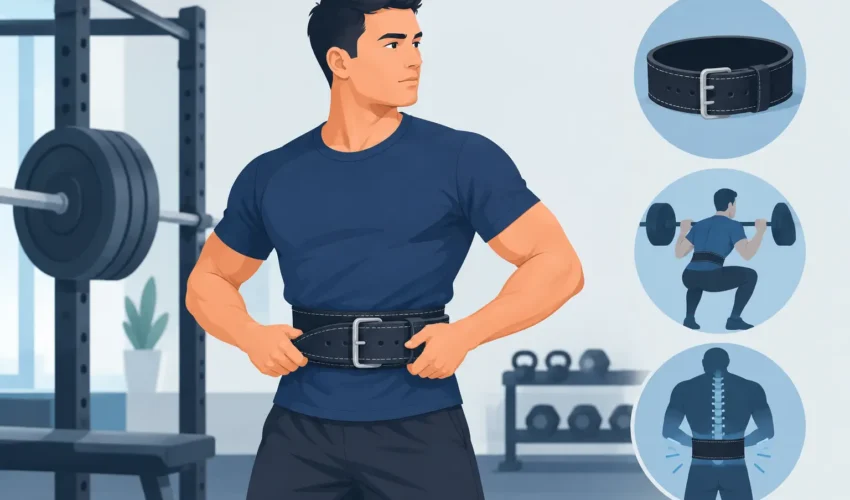

A heavy barbell changes the conversation fast. When the plates climb, lifting belts can give lifters a firmer platform to brace against, stay locked in through hard reps, and attack big squats or deadlifts with more confidence. They are not a shortcut, though. A belt works best when it supports a strong brace you already know how to create.
For lifters who watch massive PR attempts, strongman events, bodybuilding training, and garage-gym battles, belts can look like mandatory gear. The truth is more useful: wear one for the lifts and loads where it helps you perform, skip it when it gets in the way, and never let it replace technique.
What Lifting Belts Actually Do
A lifting belt does not hold your spine in place like a back brace. Its main job is to give your abdominal wall something firm to push against. When you inhale, tighten your trunk, and brace hard in all directions, that pressure helps create a more stable torso under load.
Think of it as building a cylinder around your midsection. Your diaphragm pushes down, your abs and obliques push outward, and your back muscles contribute from behind. The belt provides resistance around that cylinder. Done well, this can make it easier to maintain a strong position when a barbell wants to fold you forward.
That is why belts are most useful for heavy compound movements with substantial spinal loading. Back squats, front squats, deadlifts, overhead presses, clean pulls, and certain strongman lifts are common examples. A belt may also help during heavy rows, but only if it does not encourage sloppy torso position or turning the movement into a back-and-hip heave.
When to Use a Lifting Belt
The best time to use a belt is not determined by a universal weight on the bar. It depends on your training experience, your ability to brace, the lift, and the purpose of the set.
Many lifters save the belt for their heaviest working sets, often around the point where breathing and bracing become the limiting factor. For a powerlifter, that might be a top single or tough sets of three to five. For a bodybuilder, it may be high-effort leg presses, hack squats, squats, or Romanian deadlifts taken close to failure. For a recreational lifter, it could simply be the sets where form starts demanding full attention.
Using a belt on every warm-up set is usually unnecessary. Lighter, beltless work gives you more practice creating tension with your own trunk. That practice matters. If you only feel stable when the belt is on, you may be skipping a foundational skill.
There are exceptions. Competitive powerlifters often use their competition belt on warm-ups to rehearse setup, depth, breathing, and command-ready timing. If specificity is the goal, that makes sense. The belt is part of the event.
How to Wear a Belt So It Helps
The tightest possible setting is not automatically the strongest one. You need enough room to take a big breath and push your torso outward into the belt. If you cannot expand your abdomen at all, loosen it one notch.
Placement varies by body shape and lift. Most people position the belt around the area between the ribs and hips, then make small adjustments until they can brace hard without the belt digging painfully into the pelvis or rib cage. Deadlifts often require a slightly higher or lower placement than squats because the starting position changes where your torso compresses.
Before the rep, get set, inhale deeply into your torso, and create pressure around your whole midsection. Do not only push your stomach forward. Expand into the front, sides, and back of the belt. Then lock that brace in before you descend or pull.
On a heavy squat, you may hold most of that breath through the hardest portion of the rep before resetting near the top. On deadlifts, get your breath and brace before you pull slack out of the bar. The precise breathing pattern can vary, especially during higher-rep work, but losing all tension mid-rep is rarely a winning move.
A belt will feel strange at first. That does not mean it is wrong. Start with moderate weight and use it long enough to learn the skill before deciding whether it works for you.
Leather, Nylon, Lever, or Prong?
There is no single best belt for every lifter. The right choice comes down to the lifts you prioritize, your body, and how quickly you need to adjust the fit.
A stiff leather belt with a consistent width is the classic choice for powerlifting-style squats and deadlifts. It offers a solid surface to brace against and holds up for years, but it can require a break-in period. A 10 mm belt is plenty for most people. Thicker belts can feel extremely rigid and supportive, but they are not automatically more comfortable or more effective.
Lever belts are fast to close and give a repeatable fit, which makes them popular for heavy barbell sessions. Their drawback is less flexibility if you need a looser setting for deadlifts, high-rep work, or a day when your torso feels different. Prong belts take a little longer to secure but make small adjustments easier.
Nylon belts are lighter, more flexible, and usually more comfortable for functional fitness, Olympic lifting, conditioning, and general training. They may not feel as immovable as a thick leather belt under a near-maximal squat, but that is not a flaw. For athletes who need to transition from pulls to cleans to carries, quick adjustment can matter more than maximum rigidity.
Avoid choosing a belt only because a giant lifter wears it in a highlight clip. A belt that pinches your ribs, jams into your hips, or prevents a full brace will not become a great belt just because it looks serious.
The Biggest Mistakes Lifters Make
The first mistake is using a belt to cover weak technique. If your deadlift setup is loose, your squat caves forward because you lose upper-back position, or your range of motion is inconsistent, the belt cannot solve the real problem. Reduce the load, clean up the rep, and build back up.
The second is wearing the belt too low or too tight. A belt positioned directly on the hips can block movement and cause bruising. One cranked down so hard that you cannot inhale turns bracing into a fight before the lift even starts.
The third is treating a belt like armor against injury. Good bracing can improve stability, but training safety still comes from sensible loading, controlled progression, sound technique, recovery, and paying attention when pain is not normal training discomfort. Sharp pain, numbness, radiating symptoms, or recurring back issues deserve evaluation from a qualified medical professional.
The final mistake is saving the belt only for an all-out max. A belt is a skill tool. Practice with it during challenging but manageable sets, not only when adrenaline is high and the bar is bending.
Beltless Training Still Has a Place
Strong beltless training builds confidence and exposes weak spots. Paused squats, lighter deadlifts, split squats, carries, rows, and controlled core work can all improve the trunk strength and positional discipline that make belted lifting better.
That does not mean you need to prove toughness by refusing a belt. The strongest approach is usually both: train beltless when the load and goal call for it, then use the belt when hard sets demand every bit of disciplined bracing you can bring.
If you are filming your training for VIDS24 or just reviewing a lift after the session, watch the details that matter: Does your torso stay stacked? Does the bar path stay controlled? Can you repeat the same brace rep after rep? A belt should make those answers better, not simply make the weight look more dramatic.
The right belt will not lift the bar for you. But when the weight gets serious, a well-fitted belt and a hard, practiced brace can give you the stable platform needed to make the next rep look powerful instead of desperate.